Home page Weekly Schedule Study Aids Blackboard Charlie's History Writing Center Official Websites
 
HIS 135 Assignment 3
Short Paragraph Two


After reading parts V and VI (chapters 14-18) in the Findley-Rothney textbook--this is a bit longer than the other paragaph reading--and my short note (below), answer the following question in a short paragraph of about one-half page in length:

How has the American understanding of democracy, as a political system, changed since 1945 with the emergence of more independent countries in the world?

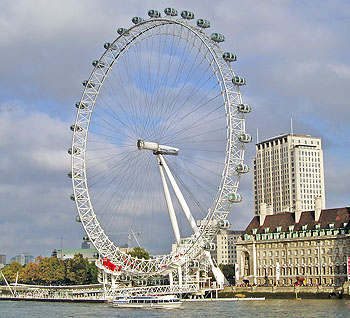
Millennium Wheel
London's Millennium Wheel; photo courtesy Bryan Grasser
 
Blue Separator Bar
 
Directions
 
Write your paragraph using a word processor (double-spaced, one-inch margins, font size 10 or 12).  This assignment should be a single paragraph about a half-page in length.  Please take the time to organize your thoughts in a logical manner and cite evidence from your textbook reading, or outside research, to support your analysis.
Please consult Charlie's History Writing Center for specific information on the writing requirements of this course.
 
You may choose to listen to some short remarks about the two short paragraph assignments (The specific chapter reading assignments have changed since I first recorded these remarks so many years ago, but the remarks are still valid.) as a mp3 file.  You can also read the instructions as a txt fileTake a moment and read some of my notes on Democratization and the Division of South Asia.
 
This assignment should be sent by e-mail according to the instructions for Using Email.
 
You may also wish to take part in the Blackboard on-line discussion of this assignment.
 
Each short paragraph is worth a maximum of 50 points.
 
Blue Separator Bar
 
Note

In the viewpoint of many scholars who have studied the Western world, history since 1945 has primarily been seen as a hegemonic contest, winner-take-all, between democracy (representing the free world, the free market and free peoples), and communism (represented by the Iron Curtain, the planned market and not-so-free peoples).  That sort of "two camps" imagery can be traced back to the words of Winston Churchill in 1946. (See my remarks on the Cold War from HIS 242.)

Allegedly, with the dismantling of the Berlin Wall, the reunification of Germany and the elimination of the communist party monopoly of power in Russia--events that all occurred around 1990--democracy has won the battle.  That sort of simplistic view of contemporary history (It is so simplistic that I can't even begin to address it.) neglects to recognize the far more important processes that have been taking place in the world since 1945, namely the agricultural, medical, communication, green and technological revolutions and the decolonization process that involved much of the non-developed world (not to mention the worldwide spread of "pop" culture).  Indeed, the world today still faces fundamentally-critical problems that affect its future prospects for survival.


This page is copyright © 2008, C.T. Evans
For information contact cevans@nvcc.edu

 
ps.  I really like these short paragraph questions because they require some reflection and interpretation; you must also be very precise with your wording because of length considerations.  There is no single right answer.